
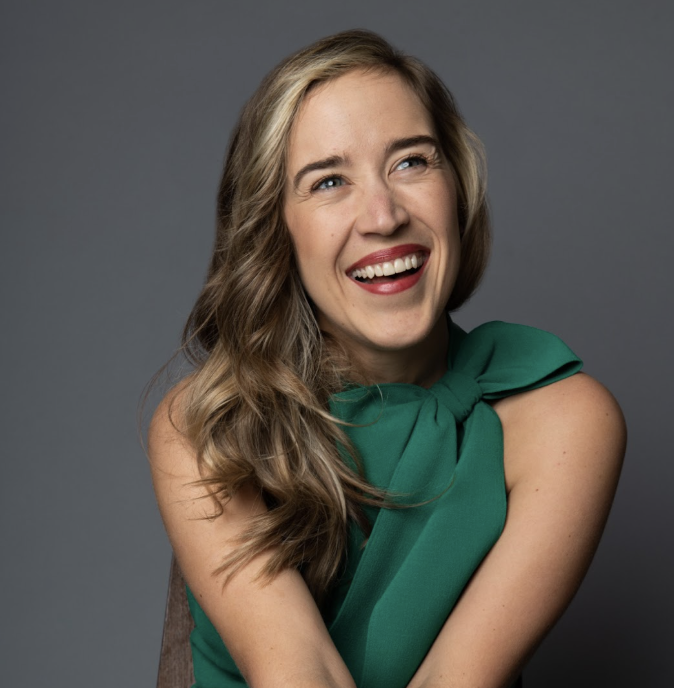
Singer Spotlight: Making It as an Ensemble Singer and Baroque Performance Practice Specialist with Sarah Moyer

Photo credit: Sasha Greenhalgh Photography
Sarah Moyer: Making It as an Ensemble Singer and Baroque Performance Practice Specialist
When it comes to converting a degree in vocal performance into a professional career, the options for talented young singers can feel thin. Competition is fierce, and unlike instrumentalists, there aren’t many ready-made opportunities in vocal ensembles waiting for the next batch of graduates to audition.
How do I make connections? Where can I get my foot in the door? Is my personal life on hold until I’m 40?
For CBE soprano Sarah Moyer, the answer was to get creative, step into the unknown, and break a fresh trail through the vocal wilderness. A graduate of the prestigious New England Conservatory, she quickly connected with the young, vibrant energy and whirlwind touring schedules of vocal chamber ensembles—a space that barely existed a decade before.
Today, she’s built a successful career as a professional ensemble singer and Baroque performance practice specialist, splitting her time between groups like the Skylark Vocal Ensemble in the greater-Boston area, Santa Fe Desert Chorale, and the Colorado Bach Ensemble. Sarah and her partner also welcomed their second child into the world in August of 2025, and soon they’ll be moving back to New England to expand her administrative role with Skylark.
We caught up with Sarah to talk about her journey, career advice for aspiring young vocalists, and how to balance your personal and professional dreams in the arts business.
What was your early training like?
I’m from Bixby, OK, a suburb of Tulsa, and my parents were the choir director and organist at the church I grew up in. I was singing a lot growing up, and they got me involved in community theater. Our public school also had a really great arts program, and my 8th-grade choir teacher, Mrs. Parker, eventually encouraged me to audition for the Tulsa Youth Opera.
I’ll have to admit that, at the time, I thought opera was ridiculous. Their vibrato sounded like gurgling bubbles to me!
But I quickly fell in love with being a classical singer, and I was in productions of Turandot, Tannhauser, and Cunning Little Vixen at a very young age. I was dead set on being a musical theater star, and the plan was to go to Oklahoma University, study with Florence Birdwell, and become the next Kristen Chenowith.
How did it go?
Well… I didn’t get in. That was a tough pill to swallow!
I went to Oklahoma State University instead, and that’s where I spent a lot of time singing in choirs and small groups. It was completely different than high school choirs with pianists feeding everyone their parts.
All OSU’s choirs were built around tuning forks—you get your starting pitch from the fork, and the rest is on you. It was completely refreshing and inspiring.
You learn how to breathe as a group, the art of pristine cutoffs, and tricks like how to tune by shaping your vowels differently. It was an incredible challenge, and it quickly became my life. By the time I was a junior, I wanted to be an ensemble singer who specialized in early music.
Of course, at that time, being able to create a career as an ensemble singer was really a new thing. Some of the big groups we’ve all heard of today were just starting out, and the Baroque performance practice scene offered a lot of the best opportunities.
So, I auditioned at a lot of schools, half of which had early music programs, and I finally settled on the New England Conservatory for vocal performance in Boston, MA. Boston is a Mecca for early music, so while I was focusing on my technique and developing my voice in grad school, I was also able to quickly gain experience singing in Renaissance and Baroque ensembles.
What was the transition to your professional career like?
Becoming a professional singer isn’t as straightforward as for instrumentalists, and it won’t be a path you expect. You often find work where it’s needed whether you’ve done it before or not, and you fake it till you make it!
For me, there was an opening for a professional choir when I was fresh out of grad school, and I figured, “It’s a paycheck, so I guess I’ll see where it goes.”
By chance, that was the perfect entry point to the network of singers I work with today. Had I decided to try to make a career in opera, as most graduate programs prepare you for, my career would have looked much different.
What’s the biggest difference between the two worlds?
Opera schedules and vocal ensemble schedules vary so much, and there’s not much room for crossover in the industries due to just that. Styles also vary drastically, and when you specialize in something, you most often navigate towards that specialty.
Ensembles also look for strong singers who are good colleagues, because there’s a lot of personal interaction, and as a result, they can be tighter communities.
The biggest piece of advice I’d give young singers looking to do ensemble work is, don’t underestimate the value of looking for startup groups or creating your own project from scratch.
That’s how I got connected with Skylark, and it’s been a positive trajectory ever since. You never know where a new group will go, and you’ll probably meet a lot of great people along the way. Don’t be afraid to take a leap of faith!

Photo credit: Alfonso Lozano
And when you check out those groups on social media, you’ll realize they look a lot like you—young, eager, and ready to take on the world. I did a lot of traveling early on, and every week was in a new city. Miami, Austin, Tucson, Atlanta—it’s an exciting career for a singer. One week it may be a Renaissance motet, and the next you’re singing a contemporary piece that you learned on the plane!
How did you get connected with CBE?
My husband and I moved to Colorado in 2021. I worked with Emmanuel in Boston, and they’ve been doing a full cantata every Sunday for the past 40-50 years, and I really wanted to find something like that in Colorado. Everyone told me that James Kim was an incredible interpreter of Bach, and CBE was an awesome place to be.
I reached out, submitted my materials, and he hired me blind to come in and sing. It’s been a wonderful experience, and even though I’m sad to be moving to Boston, I will definitely be coming back to sing.
What advice would you give a young singer who wants to become a Baroque specialist?
There’s a lot of variety in Baroque performance practice. The first step is listening to lots of different recordings and studying Bach’s performance practice. Then, pick an easy aria and see how some of it can be applied.
Having connections is also extremely important, and I would encourage any singer interested in early music to reach out to an established Baroque music artist or colleague and talk. Maybe they won’t respond, but maybe they will. And then you’ve got some support and guidance.
One of the joys of Bach’s music is that it can be sung at any age and by many voice types.
If you can match pitch and sing within the style, there’s no reason you can’t sing Bach effectively. What’s important is that you find your unique tone and approach.
It’s easy to forget that the same voice types that exist today also existed in Bach’s time, and they used them all, from lean tones to wide vibratos.
What’s next for you and your family?
Well, we just had our second child, and our three-year-old is already becoming a little musician! He’s obsessed with Peter and the Wolf, and he’s singing it all day long.
We’re sad to report that we’re moving back to the Boston area, but it’s something that’s always been at the back of our minds. I spent 12 years out there, and my husband 6, before moving to Colorado.
Oddly enough, it will actually make it easier to travel because I’ll be doing less of it, so I’ll have plenty of opportunities to sing with CBE and visit my network of friends. We’ve been able to establish a wonderful community here in Colorado, and the Colorado Bach Ensemble has been the heart and soul of it.
Follow Sarah on Facebook and Instagram to hear her sing and learn more about Baroque performance practice, and visit coloradobach.org to find out when you can hear her next in Colorado.